3. Environmental Sustainability
The Company primarily manufactures polyester chips, polyester filament yarn, and polyester staple fiber. During production, related activities and services may generate wastewater, air emissions, solid waste, toxic substances, and noise, all of which are associated with energy consumption and environmental impact.
In fulfilling our corporate social responsibility, we have consistently regarded Environmental Sustainability as one of our core business principles. While pursuing growth, we remain committed to environmental protection and the sustainable use of resources.
Policy Implementation
1.All emissions generated from products, activities, and services must comply with environmental protection regulations, occupational safety laws, and other applicable requirements.
2.Air Pollution Control:
We focus on reducing emissions and lowering PM2.5 concentrations through high-efficiency control equipment to prevent harmful pollutants from entering the atmosphere. Regular third-party monitoring is conducted.
3.Water Pollution Prevention:
In addition to periodic third-party monitoring of soil and groundwater, the Company has installed water pollution control systems connected to the Environmental Protection Authority for real-time monitoring.
4.Waste Management:
All waste is handled by qualified professional disposal agencies. Employees are strictly prohibited from improper disposal of waste.
5.Sustainable Supply Chain Management:
A dedicated internal unit ensures that suppliers comply with relevant social responsibility standards. We actively share environmental practices and maintain communication with suppliers and contractors.
6.Green Label Promotion:
The Company promotes green certification by enforcing strict standards on raw materials and supplies to minimize environmental burden.
7.3R Initiatives (Reuse, Recycle, Reduce):
We actively promote recycling, reuse, and waste reduction through company-wide participation. Environmental training is provided to employees, and suppliers are encouraged to join our green supply chain to achieve shared sustainability goals.
8.Pollution Prevention and Resource Efficiency:
Continuous efforts are made to reduce industrial waste, conserve energy, and enhance recycling practices.
9.Equipment Upgrades:
Outdated equipment is replaced with advanced pollution control technologies to reduce environmental impact.
Achievements
In recent years, the Company has focused on “reducing greenhouse gas (GHG) emissions”, “energy consumption”, and “waste generation”. By optimizing production processes and prioritizing environmentally friendly materials and responsible supply chain partners, we implement green management from the source.
We also promote environmental awareness among employees and encourage low-carbon practices in daily operations to foster an eco-friendly corporate culture.
1. Greenhouse Gas Emissions
Annual verification in accordance with ISO 14064-1
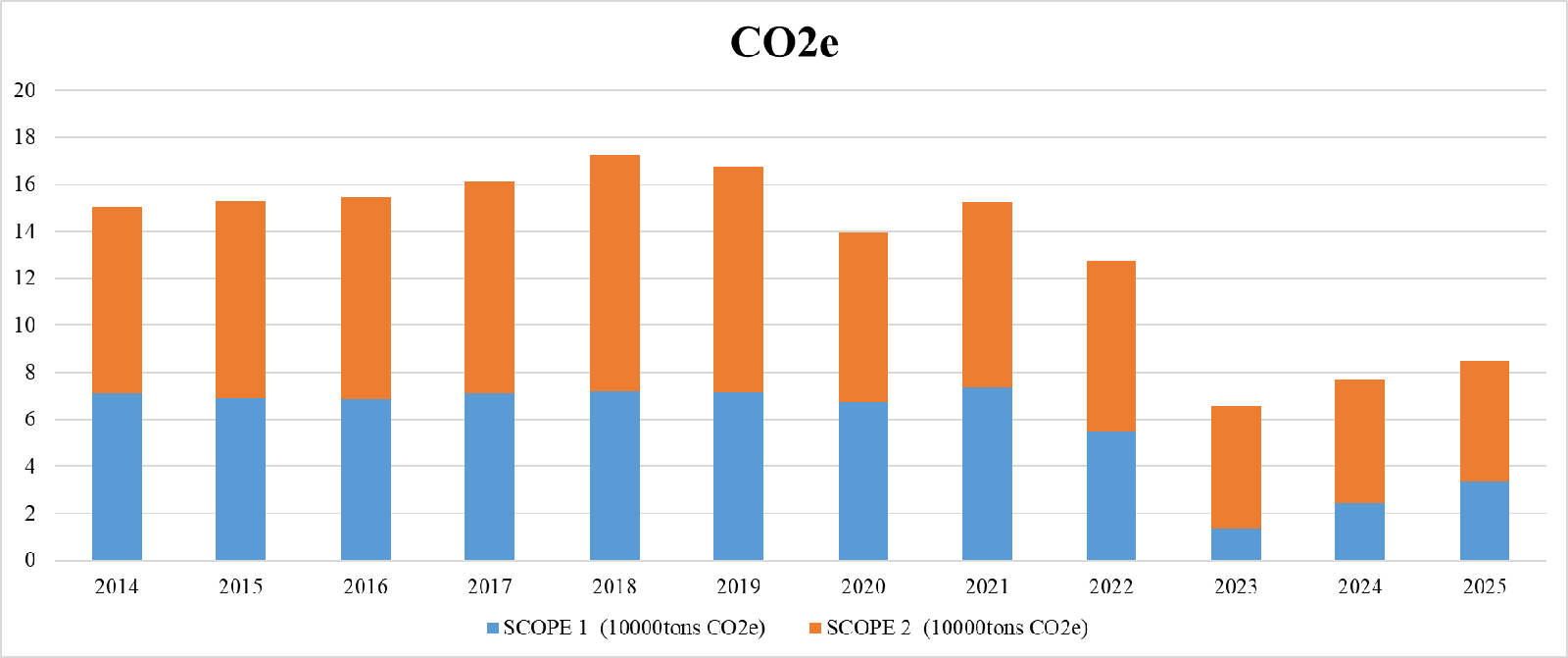
GHG emissions from 2014 to 2025 are tracked
In 2023, natural gas replaced heavy oil, significantly reducing emissions to 65,000 tons CO₂e
From 2023 to 2025, emissions increased due to production expansion
2. Energy Use
Utilities:
Established an Energy Management Team in 2016 to monitor energy usage
Achieved an average annual electricity saving rate of 1% from 2015 to 2024
Regular equipment upgrades are implemented
Water Resources:
Wastewater treatment facilities are installed in compliance with regulations
Tap water consumption in 2023 decreased by 5,565 tons compared to 2022
3. Waste Reduction
Waste Management:
All industrial waste (e.g., domestic waste, coal ash, sludge, waste wood) is handled by qualified contractors
Waste reduction achievements: 2022 reduced by 804 tons compared to 2021
2023 reduced by 942 tons compared to 2022
Air Pollution:
Reduction in SOx and NOx emissions: SOx reduced by 13% in 2022 compared to 2021
NOx reduced by 15% in 2022 compared to 2021
4. Development of Environmentally Friendly Products
Certified under the Global Recycled Standard (GRS)
Continuous increase in recycled polyester products made from PET bottle flakes
Development of “Textile-to-Textile” product, achieving closed-loop recycling